
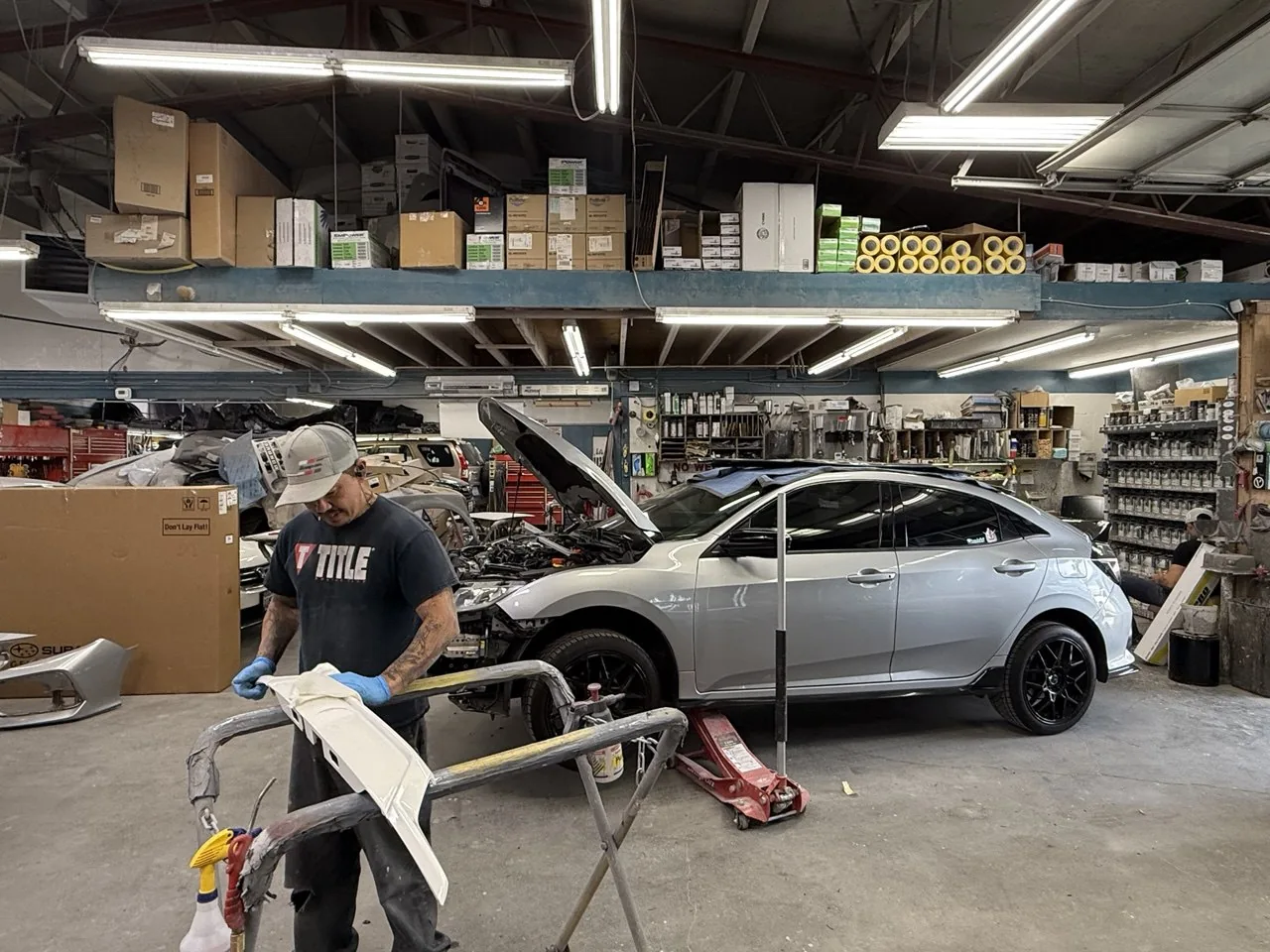
Describe how the damage happened
A low parking barrier can scrape the underside, while another vehicle may push the cover inward and leave little visible evidence afterward. Describe the impact and point out loose corners, broken trim or a changed gap.
We consider the cover material, damaged area and condition of its attachment points. A surface mark may call for a different approach from a split cover, torn tab or bumper that no longer sits in place.
Separate the finish from the impact damage
Repairing a painted cover may involve correcting the damage and refinishing the affected part. If replacement is recommended, ask how that changes the parts and paint work included in your estimate before approving the repair.
An impact can also affect components behind or mounted in the cover. Inspection findings and vehicle requirements determine whether additional parts, checks or calibration work belong in the repair plan; appearance alone cannot answer that question.
Mention equipment and prior repairs
Let us know if your vehicle has parking sensors, cameras or driver assistance warnings related to the damaged area. Mention any new alert or change in behavior so it can be considered during assessment.
Tell the shop about previous bumper repairs, peeling paint or damage that existed before this incident. Separating those conditions helps us explain the scope and identify questions that may remain until parts are removed for inspection.
QUESTIONS ABOUT
BUMPER REPAIR.
Can a cracked bumper cover be repaired?
Possibly. The crack location, material, mounting damage and applicable repair requirements matter. We need to assess the actual cover before recommending repair or replacement for your vehicle.
Why might the estimate change after bumper removal?
The cover can hide damaged supports, attachments or other parts. If closer inspection reveals additional work, the repair scope needs to reflect those findings and be discussed with you.