
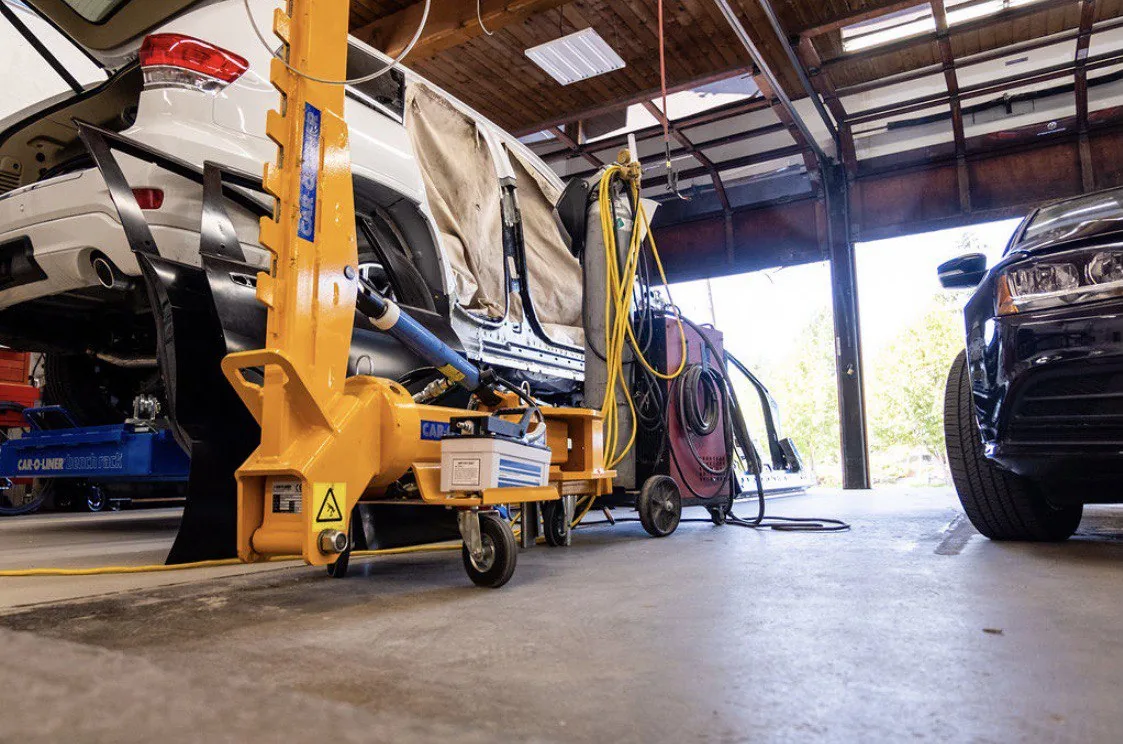
Look beyond the damaged body panel
A truck or other body-on-frame vehicle may have damage beneath panels that still look relatively straight. Inspection considers the impact area, frame shape and mounting locations. Body position, bumpers and nearby components can help identify where a more detailed assessment is needed.
Not every pickup, utility vehicle or older car has the same construction. Share the VIN and any history of frame repairs or corrosion so we can identify the vehicle accurately. Existing deterioration may affect the work needed and the options available after a new collision.
Straightening is a repair decision
The words full frame straightening describe a type of structural repair, not a promise that every bent frame can be returned to service. The damage location, material and manufacturer repair guidance help determine which repairs are appropriate and which sections or assemblies need replacement.
Structural work can also affect the fit of the body and attached parts. An estimate may include removing components to gain access, replacing damaged mounts or brackets, and completing related body and paint work. We explain these connections so the scope is easier to understand.
Plan the next step with either shop
Tell us whether the vehicle rolls, steers and has been moved since the impact. A visible bend or displaced wheel is a reason to discuss transport before bringing it in. Photographs help start the conversation, while an in-person assessment establishes the repair plan.
Ask which measurements inform the decision, what can be confirmed initially and what requires further access. When additional damage is found, we discuss how the estimate changes. The goal is a defined repair scope rather than an assumption based only on the size of the vehicle.
QUESTIONS ABOUT
FULL FRAME STRAIGHTENING.
Does every SUV have a separate full frame?
No. Vehicle construction varies. The year, model and VIN help us identify whether the vehicle uses a separate frame or an integrated unibody structure.
Will straightening alone complete the collision repair?
Often there is related body, mounting or component damage to address. We explain the complete proposed repair rather than treating structural correction as the only step.